
The Auditor Called. Your Next Inspection Is in 3 Weeks. Now What?
Three weeks sounds like enough time. It's not. Not if your SOPs are scattered across a shared drive, half of them haven't been touched since 2021, and two of your shift leads are the only people who actually know how things work on the floor.
Safety auditors don't care about intentions. They care about paper trails.
Here are the five SOPs auditors ask for every single time, what they're looking for in each one, where most warehouses fail, and how to get them done fast.
What Do Auditors Look for in Warehouse SOPs for a Safety Audit?
Auditors want to see documented, dated, worker-acknowledged procedures that match what's actually happening on your floor. Generic templates don't pass. Outdated docs don't pass.
The bar isn't perfection. It's proof that your team knows the process, follows the process, and has signed off on it. That's it. But most warehouses still fail to clear that bar on at least two or three of these five SOPs.
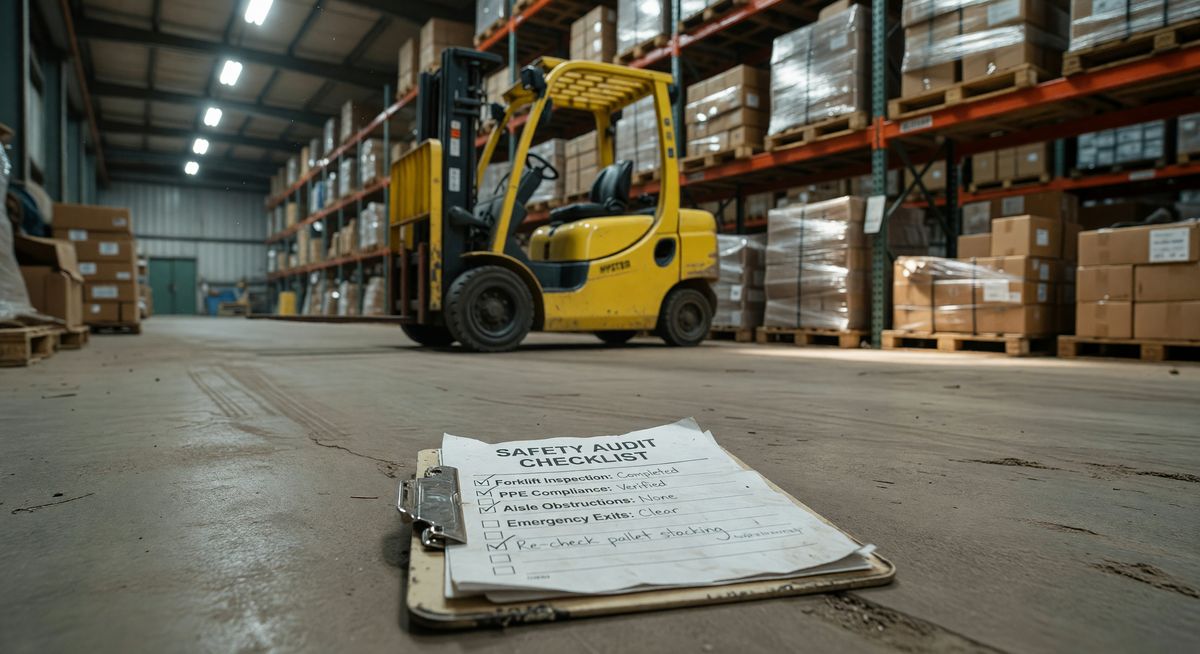
How Do You Write an Emergency Evacuation SOP That Passes Inspection?
An emergency evacuation SOP must include exit routes, assembly points, headcount procedures, and the names of people responsible for each step.
This one sounds simple. It's not.
Auditors will walk your floor and physically check that your posted exit maps match your written procedure. If your SOP says "assemble at the north parking lot" but the sign on the wall points somewhere else, that's a finding. Probably a major one.
What auditors check: - Signed acknowledgment that every worker has read and understood the procedure - Date of last evacuation drill (within 12 months is the standard expectation) - Named warden or floor lead responsible for headcount - A plan for workers with mobility limitations
Common gap: The SOP exists, but it's generic. "In case of emergency, exit the building" is not a procedure. Your SOP needs specific routes for specific areas of your facility.
Write this SOP from the perspective of someone standing at your busiest pick station. Where exactly do they go? Who do they report to? What if the primary exit is blocked?
If you can answer those three questions in writing, you've got a real SOP.
What Should a Forklift Operations SOP Include?
A forklift SOP must cover pre-shift inspections, load limits, speed rules, pedestrian zones, and the certification requirements for every operator.
OSHA requires forklift operators to be certified. That's not optional, and auditors will ask for the records.
But beyond certification, they're looking at whether your written procedure matches your physical setup. Do your aisle markings match your SOP? Does your SOP set a speed limit? (It should. 5 mph in pedestrian areas is the standard.) Does it say who's authorized to perform pre-shift checks and what to do if a forklift fails inspection?
What auditors check: - Operator certification records with expiry dates - Pre-shift inspection checklist (separate from the SOP, but referenced in it) - Defined pedestrian crossing zones - Who has authority to take a forklift out of service
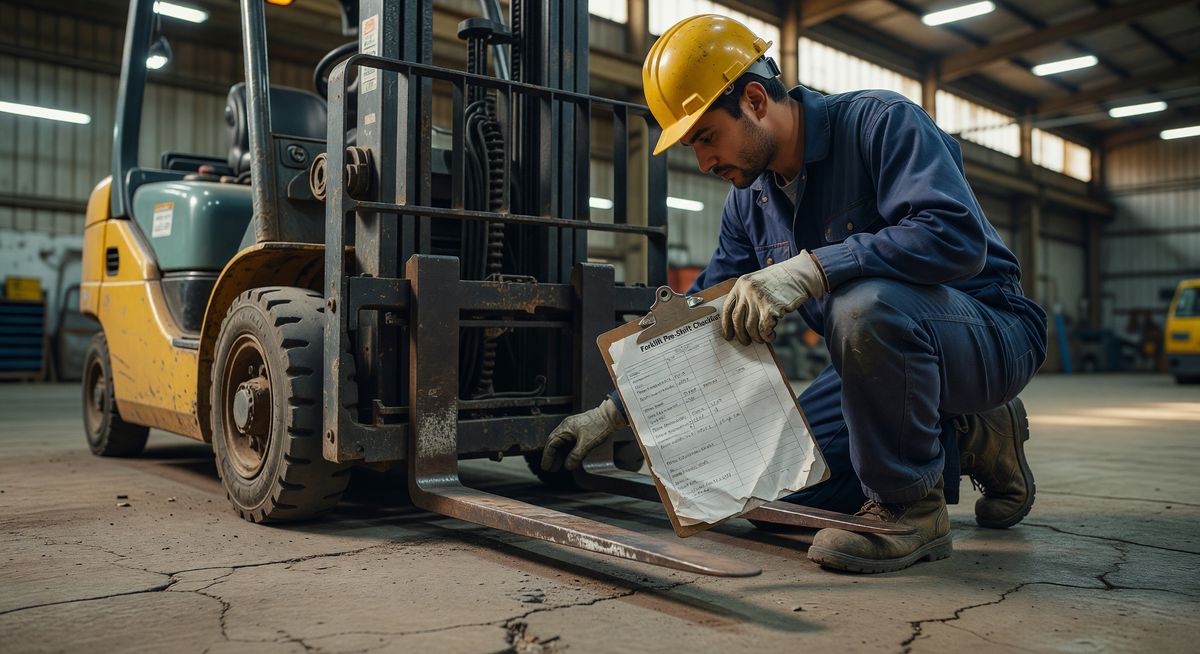
Common gap: The pre-shift checklist exists on paper but nobody's filling it out daily. Auditors ask to see completed checklists from the past 30 days. If those pages are blank, that's a problem.
Film a real pre-shift inspection with your most experienced operator. Walk through every step. That video becomes your training record and your reference for writing the procedure. A tool like BoFlow lets you turn that phone recording into a step-by-step documented SOP in minutes, which is useful when you're working against a deadline.
How Do You Create a Hazardous Materials Handling SOP Quickly?
A hazardous materials SOP must reference your Safety Data Sheets, define storage requirements, list PPE requirements for each substance, and explain spill response steps.
First, pull your SDS binder. If it's not current, fix that before you write anything else. An outdated SDS library with a polished SOP is still a failed audit.
What auditors check: - SDS for every hazardous substance on site, updated within 3 years - Segregation rules (what can't be stored next to what) - PPE requirements written down, not just assumed - Spill kit location referenced in the SOP - Worker training records tied to this specific procedure
Common gap: Workers know what to do in practice, but there's no written evidence they were trained. Auditors need a signature. "Everyone knows how to handle this" is not an acceptable answer.
Your hazmats SOP doesn't need to be long. It needs to be specific. List every substance. Name the storage area. Name the PPE. Describe the spill steps in plain language, not regulatory jargon.
If a new hire reads it on day one, they should be able to follow it.
What Does a Lockout/Tagout SOP Need to Include?
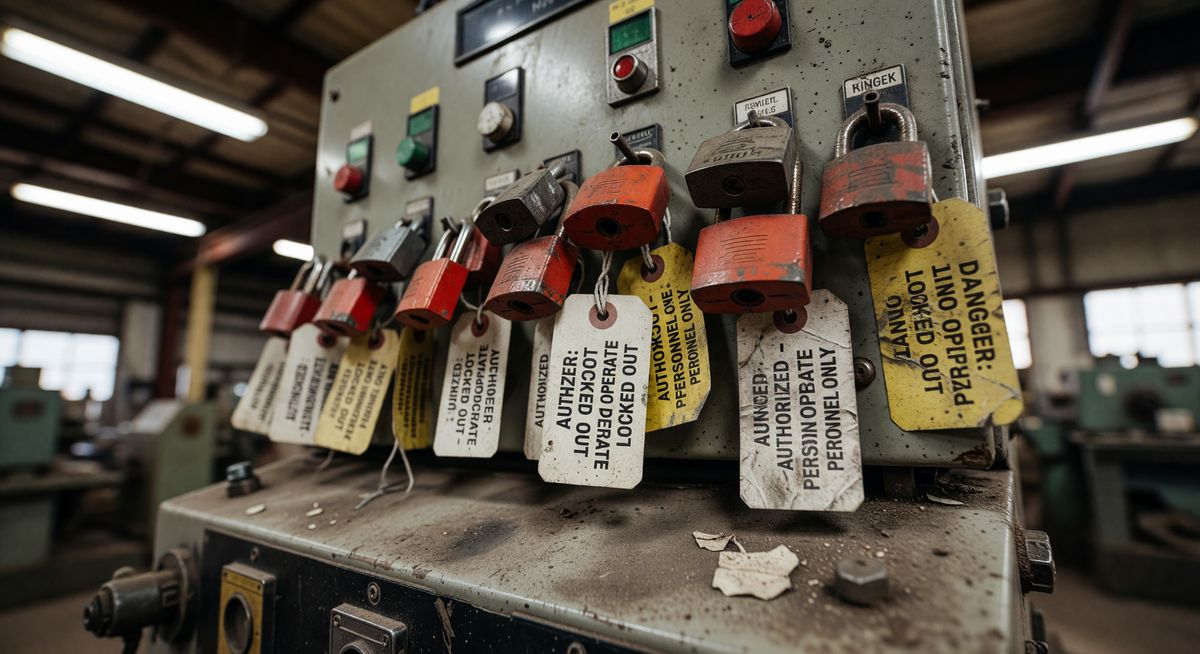
A lockout/tagout (LOTO) SOP must identify every energy source on each piece of equipment, list the isolation steps in order, and document who is authorized to perform and release lockout.
This is the SOP auditors spend the most time on. Full stop.
OSHA's 29 CFR 1910.147 is specific, and auditors know it. They'll ask for machine-specific LOTO procedures, not a general statement that "energy must be controlled before maintenance."
What auditors check: - Machine-specific procedures for every piece of equipment covered - A list of authorized employees (not just a general statement) - Evidence of annual periodic inspection of the procedures - Training records for authorized and affected employees
Common gap: Companies have a general LOTO policy but no machine-specific procedures. One document that says "de-energize before servicing" does not meet OSHA standards. You need a separate, documented procedure for each machine.
This is one area where being thorough now saves you from a willful violation later. Willful LOTO violations can run over $15,000 per incident.
Start with your highest-risk equipment. Document those procedures first. Then work down the list.
How Do You Write a Workplace Incident Reporting SOP?
An incident reporting SOP must define what counts as a reportable incident, set a reporting timeline, and describe the investigation steps that follow every report.
Auditors look for two things here. One, that you have a clear definition of what needs to be reported (injuries, near misses, property damage). Two, that your process creates a written record every time.
A culture where people "just tell their supervisor" and it goes no further is a liability. And auditors know how to spot it.
What auditors check: - A written form or system for capturing incident details - A defined timeline (most standards require initial reporting within 24 hours) - A root cause analysis step, not just "incident happened, worker was retrained" - OSHA 300 log if you're required to maintain one (generally 10 or more employees)
Common gap: Near misses aren't being reported. Workers don't know that near misses count. Your SOP should explicitly say "a near miss is any event that could have resulted in injury or damage." Name it. Define it.
The investigation process doesn't need to be complicated. Who was involved, what happened, what was the immediate cause, what's the corrective action, who's responsible, and by what date. Six questions. That's your investigation SOP.
How Do You Get Five SOPs Done in Three Weeks?
Start with the highest-risk procedure first, not the easiest one. Most managers write the evacuation SOP first because it's familiar. Don't. Write LOTO first.
Assign one SOP per week to a specific person. Not a team. One person owns it, gets input from floor workers who actually do the task, and submits a draft by a set date.
The fastest way to write an accurate SOP is to watch someone do the task and document it as it happens. Don't write from memory. Don't write from a template that doesn't match your facility.
If you're short on time, BoFlow's free plan lets you record two SOPs via phone video and generates the step-by-step documentation automatically. It won't replace your judgment about what to include, but it cuts the writing time down dramatically.
Once you have drafts, put them in front of two workers who do those jobs. Not managers. Workers. If they say "that's not how we actually do it," fix it before the auditor finds out.
FAQ
What are the most common warehouse SOPs required for a safety audit? The five auditors ask for most often are emergency evacuation, forklift operations, hazardous materials handling, lockout/tagout, and incident reporting. Having all five documented and worker-signed significantly reduces audit risk.
How often should warehouse SOPs be reviewed and updated? Annual review is the minimum standard for most regulatory frameworks. SOPs tied to equipment should be reviewed any time that equipment changes. Document the review date and the name of the person who reviewed it.
What happens if you don't have SOPs during a safety audit? Missing SOPs are typically classified as serious findings and can result in fines, mandatory corrective action timelines, and repeat inspections. OSHA fines for serious violations start at $1,000 and can exceed $15,000 per violation.
Do warehouse SOPs need worker signatures to be valid? Yes. An SOP without evidence that workers have read and acknowledged it is considered incomplete by most auditors. A sign-off sheet or digital acknowledgment record is the standard way to demonstrate this.
How long should a warehouse SOP be? Length isn't the measure. Clarity is. A good SOP is as short as it needs to be while covering every step a worker needs to follow. Most effective warehouse SOPs run between one and four pages.
Can I use a template to write warehouse SOPs? You can start with a template, but you must customize it to your specific facility, equipment, and processes. Generic templates fail audits because they don't match site-specific conditions. Auditors know a copied template when they see one.