
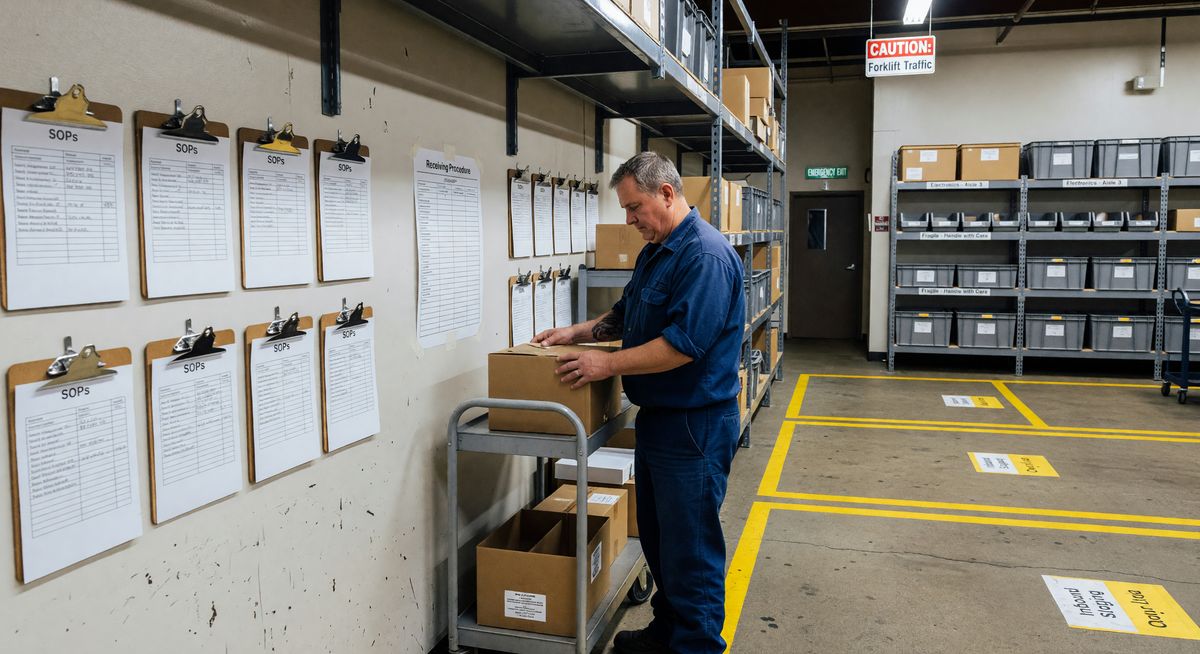
Why you need warehouse SOPs
Warehouses are repetition machines. Receiving, putaway, picking, packing, shipping, returns. The same tasks, hundreds of times per shift. When everyone does them slightly differently, small errors stack up fast.
- Receiving errors → wrong inventory counts → stockouts and overstock
- Picking errors → wrong shipments → returns and complaints
- Safety shortcuts → incidents → injuries and liability
An SOP stops the drift. One process. Same way. Every worker. Every shift.
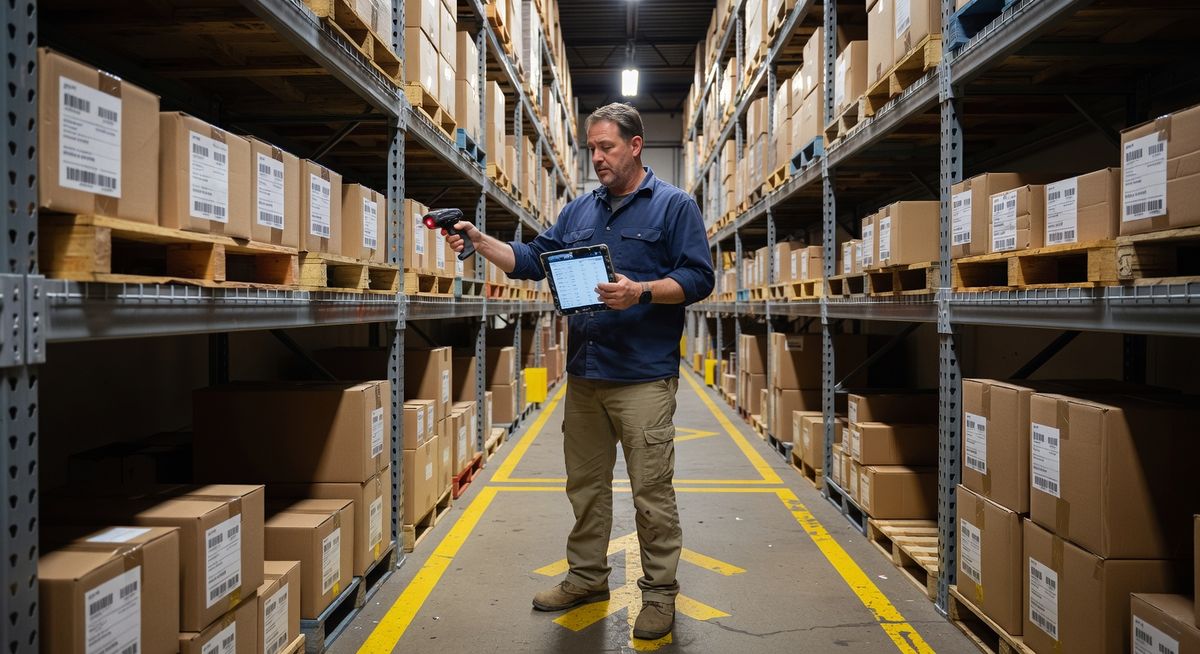
Which processes to document first
Start with what hurts most.
Tier 1. Do these first
- Receiving and inspection. This is where most inventory errors start.
- Pick-pack-ship. This is where customers feel it.
- Safety. Forklift operation, hazmat handling, evacuation.
Tier 2. Do these next
- Putaway and slotting. Bad storage = damage + slow picks.
- Cycle counting. Keeps inventory right without full shutdowns.
- Returns processing. Stops returned items from disappearing.
Tier 3. When you're ready
- Equipment maintenance. Avoids surprise downtime.
- Opening and closing. Nothing falls through the cracks between shifts.
- New hire onboarding. Faster training, less load on shift leads.
How to write one that sticks
1. Go to the floor
Don't write SOPs from your desk. Go watch the task happen. Better yet, do it yourself. SOPs written from memory miss steps. SOPs written from watching the work catch the details that matter.
2. One step = one action
Bad. "Receive the shipment and check for damage and update the system."
Good. 1. Compare the delivery note to the purchase order 2. Check all packages for visible damage 3. Count and verify quantities 4. Scan items into inventory
If a step has "and" in it, split it.
3. Add photos
Some of your team skims text. Some won't read it at all. Photos fix both problems. A picture of a correctly staged receiving area says more than a paragraph about it.
The fastest way to get photos? Record the process on video. Tools like BoFlow pull screenshots from your recording automatically. No need to stop and snap pictures.
4. Show what "done" looks like
Each step should tell the worker what they should see before moving on:
- "System shows 'Received' next to the PO number"
- "All items on the correct shelf, labels facing out"
- "Forklift key removed and stored in the lockbox"
5. Cover what goes wrong
SOPs that only describe the happy path fail when it matters most. For each step where something could break, add a short "if X, then Y."
- "If quantities don't match, fill out a discrepancy report. Tell the warehouse manager. Don't proceed with putaway."
- "If damage is found, photograph it before unloading. Flag the pallet with a red tag."
Free template. Warehouse Receiving SOP
Here's a receiving SOP you can use right now. Get the full template here.
The 8 steps:
- Check delivery docs against the purchase order
- Unload and stage in the receiving area
- Inspect for damage (photograph anything you find)
- Count and verify against the packing slip
- Log discrepancies or damage
- Label and scan into inventory
- Move to the right storage location
- Confirm receipt in the system, file the delivery note
Swap in your own systems, locations, and contacts.
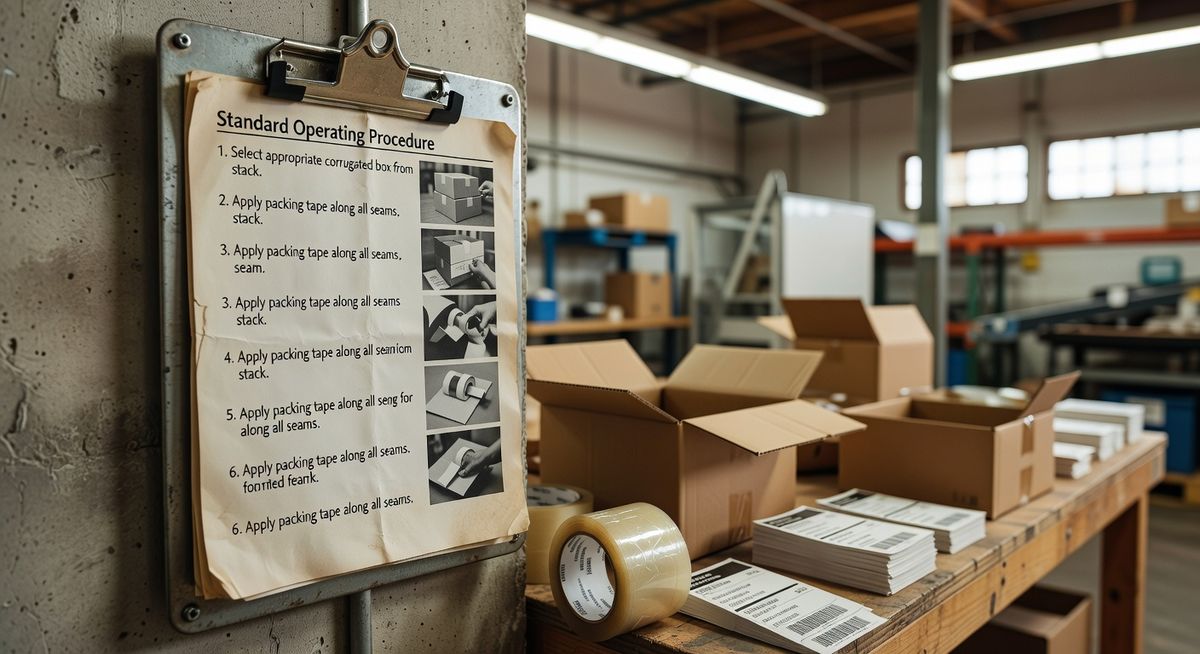
Making SOPs stick
Writing the SOP is half the job. Getting people to use it is the other half.
Post it where the work happens
Print it as a PDF with a QR code. Tape it at the receiving dock, the packing station, the forklift charging area. Workers shouldn't need a computer to look up a procedure.
Use checklists
Turn the SOP into a daily checklist. Workers check off each step as they finish. It keeps them on track and gives you proof for compliance.

Update it when things change
Processes change. New equipment shows up, layouts shift, software gets updated. Review your top 5 SOPs every quarter. If a step doesn't match reality anymore, fix it. Otherwise your team stops trusting it.
Make updates easy
If updating an SOP means opening a Word doc, reformatting, re-uploading, and reprinting, it won't happen. Use a tool that lets you re-record the process and have a new SOP in minutes.
Start here
- Pick one process. Receiving, picking, or whatever causes the most headaches.
- Go to the floor and record the best version of it.
- Create the SOP. Write it yourself or let BoFlow generate it from video.
- Post it where workers can reach it
- Track completion with a checklist
You don't need to document everything today. Start with one. See the difference. Then do the next.
Want more templates? Browse our SOP template library. Warehousing, manufacturing, food service, and more.